Skip to content
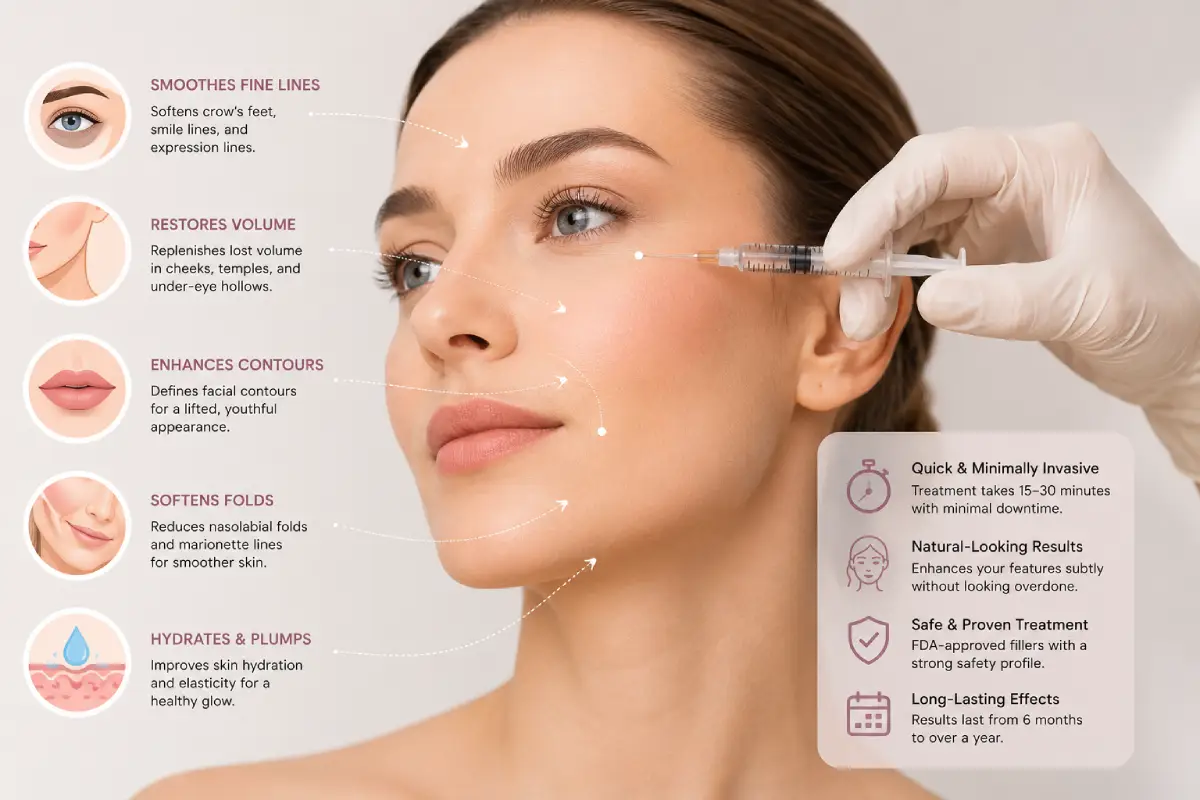
Aging can change the way your face looks, from softer cheek volume to deeper lines around the mouth and less definition along the jawline. Dermal Fillers offer a nonsurgical way to restore subtle volume, smooth visible folds, and bring better balance to your natural features. With a personalized treatment plan, fillers can help you look refreshed and more confident without the downtime of surgery.
How do dermal fillers help reduce signs of aging without surgery?
Dermal fillers are injectable gels placed beneath the skin to help restore lost volume, soften folds, and improve facial contours.
Why Volume Loss Changes the Way the Face Ages
Wrinkles often get the most attention, but volume loss plays a major role in how aging shows on the face. Over time, the natural fullness in areas like the cheeks, temples, and lower face may gradually decrease. Skin can also become less firm, and the underlying structure may not provide the same support it once did.
This can create changes that are easy to notice but difficult to describe. A person may not have many deep wrinkles, yet the face may look more tired or less defined. The cheeks may appear flatter. The area around the mouth may look heavier. The chin and jawline may lose some of their earlier shape.
Dermal fillers help by adding volume beneath targeted areas of the skin. When placed with care, they can support facial contours and reduce the appearance of certain folds. This approach is different from surgery because it does not involve incisions, tissue removal, or a long recovery period.
A Subtle Approach to Facial Aging
The best filler results often come from small, thoughtful adjustments. Aging concerns usually do not require filling every line or adding volume everywhere. In several cases, treating one area can influence how another area appears.
For example, loss of cheek volume can make the lower face look more pronounced. Adding support to the midface may help the face look more rested while also softening the appearance of nearby folds. In other instances, a small amount of filler in the chin or jawline could improve balance without changing the person’s natural features.
This is why consultation and facial assessment matter. A provider should look at the face as a whole instead of focusing only on the most obvious line or crease. A conservative plan can help avoid a heavy or overfilled look.
Common Dermal Filler Treatment Areas
Dermal filler treatment areas vary based on the patient’s concerns, facial structure, and goals. Fillers are commonly used in areas where aging causes volume loss, deeper folds, or reduced definition.
Cheeks are one of the most common areas treated because cheek volume often decreases with age. Carefully placed filler can help restore support and improve the appearance of facial balance.
Nasolabial folds, the lines that run from the sides of the nose toward the corners of the mouth, may also be softened with filler. These folds can become more visible as the midface changes.
Marionette lines, which extend downward from the corners of the mouth, can make the lower face appear sad or tired. Filler may help reduce their depth when the concern is related to volume loss.
Lips can lose shape, hydration, and definition over time. Lip filler does not have to create a dramatic change. In mature patients, it is often used to restore subtle structure and smooth the border of the lips.
The chin and jawline may also be treated when aging affects lower-face definition. Fillers in these areas can help improve facial proportions and create a more supported appearance.
Not every patient needs treatment in all of these areas. The right plan depends on what has changed, what can realistically be improved with filler, and what will look natural for the person’s face.
How Fillers Can Soften Lines Without Freezing Expression
Some aging concerns are related to movement, while others come from volume loss and skin changes.
Fillers are most helpful for lines and folds that need support beneath the skin. They do not work the same way as wrinkle relaxers (also referred to as neuromodulators). The latter is known for its ability to reduce muscle activity in certain areas.
Since dermal fillers add volume rather than limit movement, they can soften the look of lines while allowing facial expressions to remain neutral. This is especially important around the mouth, where too much correction can affect the way a person smiles or speaks.
A careful provider will usually aim for improvement rather than complete erasure. Trying to remove every visible line can make the face look less natural. Softening a fold or restoring gentle contour is often more flattering than chasing a perfectly smooth surface.
What Makes Dermal Fillers a Nonsurgical Option
Many patients consider filler treatment because they are not ready for surgery or do not need surgical correction. Dermal fillers are administered with injections, usually during an office visit. Treatment time may vary depending on the areas being addressed, but it is generally more convenient than surgical procedures.
There may be swelling, redness, tenderness, or bruising after treatment. These effects are usually temporary, although the exact recovery experience can vary. Patients are typically given aftercare instructions to help reduce avoidable irritation and support proper healing.
Another reason fillers appeal to many patients is that the results are temporary. Longevity depends on the type of filler, the area treated, metabolism, and lifestyle factors. Some patients prefer this because treatment can be adjusted over time as the face continues to age.
What to Expect From a Dermal Filler Consultation
A consultation gives the provider time to evaluate facial anatomy, discuss medical history, and explain what filler can and cannot do. Patients should be open about previous cosmetic treatments, allergies, medications, and history that may affect treatment safety.
The provider may examine facial movement, symmetry, volume changes, and skin quality. From there, they can explain which areas may benefit from filler and which concerns may require a different approach. For example, significant skin laxity may not respond well to filler alone. In some cases, a combination plan may be more appropriate.
A good consultation should also include a discussion of possible side effects, aftercare, expected longevity, and realistic outcomes. Patients should feel comfortable asking what product is being used, why it was selected, and how much correction is recommended.
Choosing a Balanced Result Over a Dramatic Change
Dermal fillers can help reduce signs of aging, but the most natural results usually come from restraint. A face should still move, smile, and express emotion comfortably. The goal is to support what has changed over time, not to create an artificial version of youth.
For many patients, filler treatment is less about looking younger in an obvious way and more about looking rested, balanced, or less drawn. Small improvements in volume and contour can make a meaningful difference without changing the character of the face.
A measured plan also leaves room for future adjustments. Since aging continues, filler treatment can be revisited over time based on how the face changes and how the patient’s goals evolve.
House of Onyx MedSpa Dermal Fillers in Vienna, VA
At House of Onyx MedSpa in Vienna, VA, dermal fillers are used to help add volume to areas that may have changed over time. It is common to notice less fullness in the cheeks, jawline, and chin as the skin and underlying structures shift with age. These changes can affect how defined or balanced the face appears. Many people explore treatment options that support these areas without surgery.
Dermal fillers are smooth gels that are carefully injected beneath the skin. Most fillers are made with hyaluronic acid, a substance your body naturally produces to help keep skin hydrated and supported. When placed thoughtfully, fillers can enhance natural contours and help create a more balanced appearance.
The treatment that our team provides begins with understanding the patient’s concerns and goals. Some patients want to soften lines around the mouth. Others are more focused on cheek volume, chin balance, or jawline support. The provider will recommend a plan based on the patient’s facial structure, the areas of volume loss, and the type of improvement that makes sense.
Schedule Your Dermal Filler Consultation in Vienna, VA.
Frequently Asked Questions
How do dermal fillers help with aging?
Dermal fillers help reduce signs of aging by adding volume beneath the skin, softening certain folds, and supporting areas that may look flatter or less defined over time.
What are the most common dermal filler treatment areas?
Common dermal filler treatment areas include the cheeks, lips, chin, jawline, nasolabial folds, and marionette lines.
Are dermal fillers a surgical treatment?
Dermal fillers are nonsurgical injectable treatments, so they do not require incisions or the recovery time usually associated with surgery.